I’m Jacob, lead developer of the upcoming Radio Commander: Battle of Britain ’40, as well as the original Radio Commander, released in 2019.
In our recent dev logs, I promised to talk about some of the biggest challenges we faced while designing the game. We’ve already covered realism and player engagement. This time, I’d like to focus on two closely connected aspects: progression and repetitiveness.
Almost 100 days of fighting. How do we keep it interesting?
The Battle of Britain had several distinctive phases, each with its own intensity and characteristics. But at its core, the conflict was about responding to enemy air raids, day after day, for almost 100 days. During development, we quickly identified a problem: after just a few days, the gameplay started to feel repetitive. We could keep increasing the intensity, sending more enemy aircraft and creating bigger challenges, but the fundamental gameplay loop remained largely the same.
In most strategy games, players work towards completing subsequent campaign missions, achieving particular objectives or, in the case of grand strategy games, expanding their territory and “painting” the map. But the Battle of Britain was a very different kind of conflict. Our area of operations is limited, our resources are finite, and we simply can't win by building more units and overwhelming the enemy. We had to find another way to make the experience engaging over the long term.
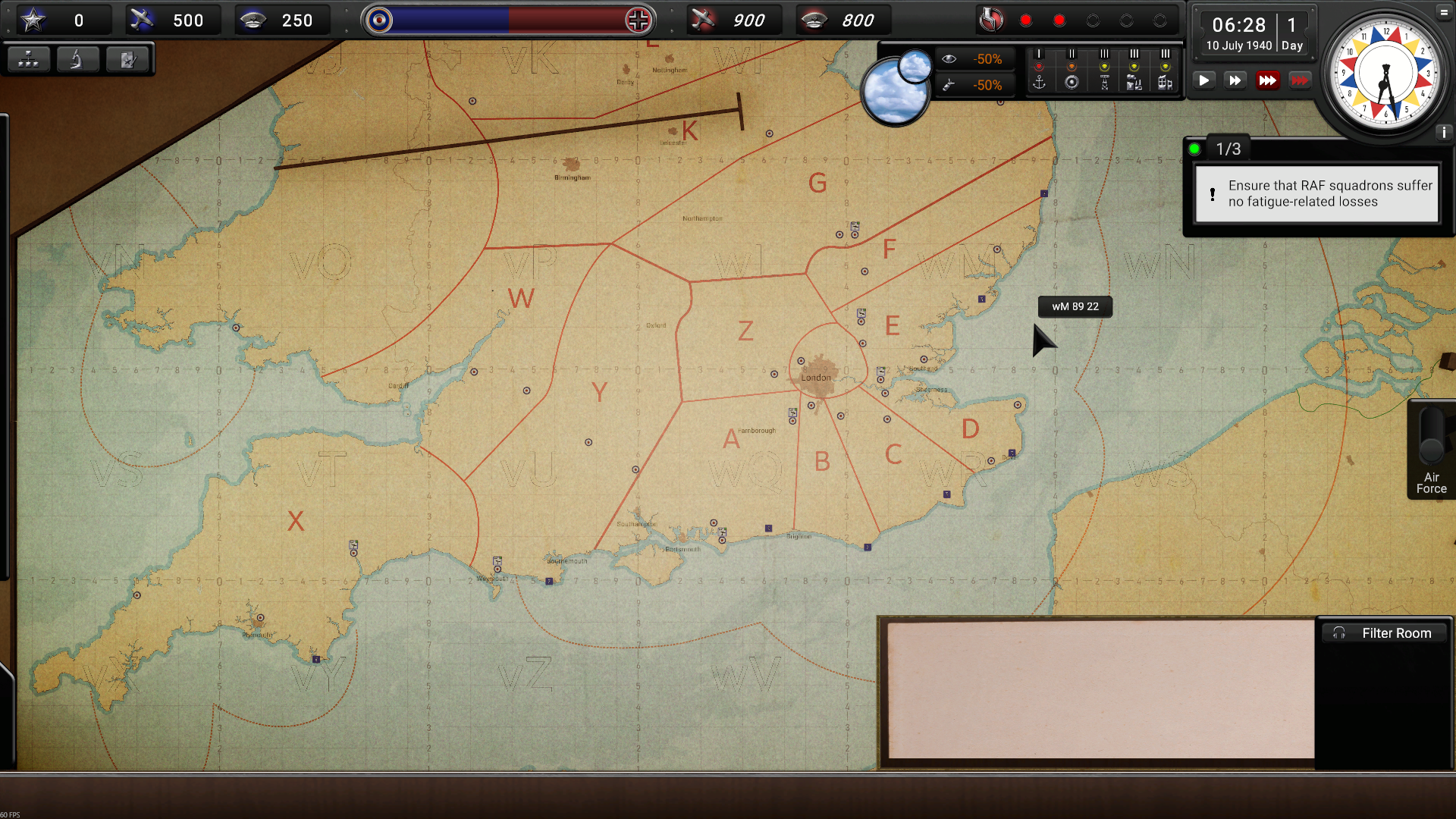
Radio Commander: Battle of Britain ’40: the game’s map covers mostly the English mainland
From a weak defence to a well-oiled machine
We eventually decided that the heart of the gameplay should be building, maintaining and commanding an increasingly effective defensive organisation under extraordinary pressure. This became one of the main pillars of the game.
At the beginning, the player has to work with significant limitations: limited resources and equipment, inexperienced personnel, poor detection accuracy and inefficient procedures, squadrons that lack experience and struggle to perform under pressure. But these limitations are not permanent.
As the campaign progresses, you can develop new capabilities, reorganise your forces, improve your infrastructure and gain valuable experience. There is always something that can be upgraded, refined or made more efficient. We wanted players to experience a particular kind of progression. One that could be summed up in a simple sentence:
"I started weak, but I overcame."
The satisfaction doesn't come from simply having more units than the enemy. It comes from looking back at the organisation you've built and realising just how much more capable it has become.
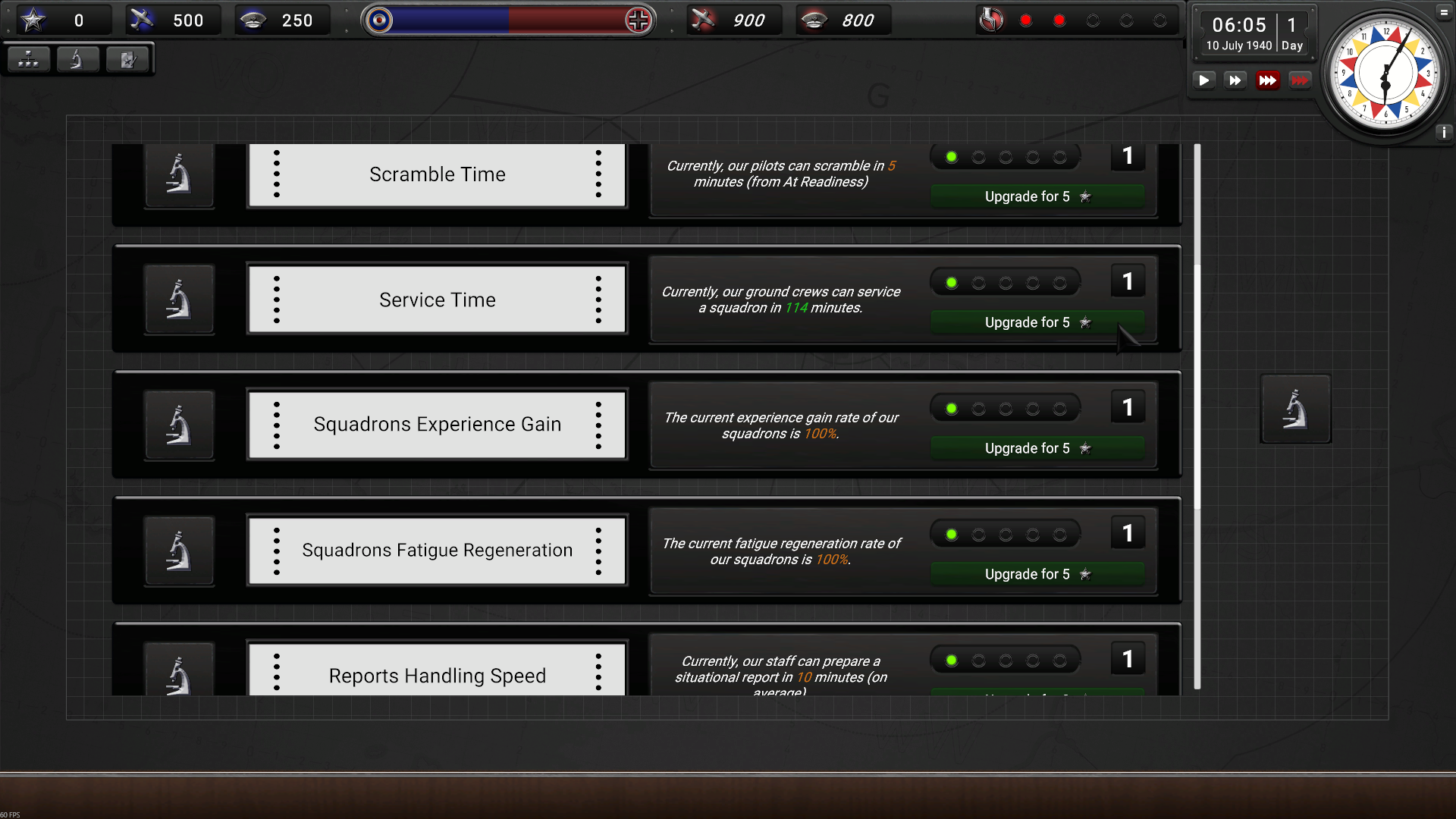
Radio Commander: Battle of Britain ’40: global upgrades panel
The problem with being weak
Of course, this approach introduced another challenge: how do we keep players engaged during the early stages of the campaign, when their organisation is at its weakest and almost everything seems to work against them?
Intercepting enemy aircraft in poor weather conditions is extremely difficult when your detection systems are inaccurate, your personnel are inexperienced and your procedures are inefficient. Later in the campaign, however, the same situation can become much more manageable thanks to technological improvements, better organisation and experienced squadrons.
Our solution was to carefully shape the campaign's intensity. The early stages give players room to learn the systems, understand the challenges and gradually improve their defensive organisation. The pressure is there, but it builds over time. Then things start to change.
As the campaign progresses, the skies become increasingly crowded. Massive waves of bombers and fighters begin to test everything you've worked so hard to build. The decisions become more demanding, mistakes become more costly, and the effectiveness of your organisation is put to the ultimate test.
We worked hard to find the right balance between these different stages of the experience: giving players enough breathing room to develop their capabilities while ensuring that the later stages deliver the intensity and pressure that the Battle of Britain deserves.
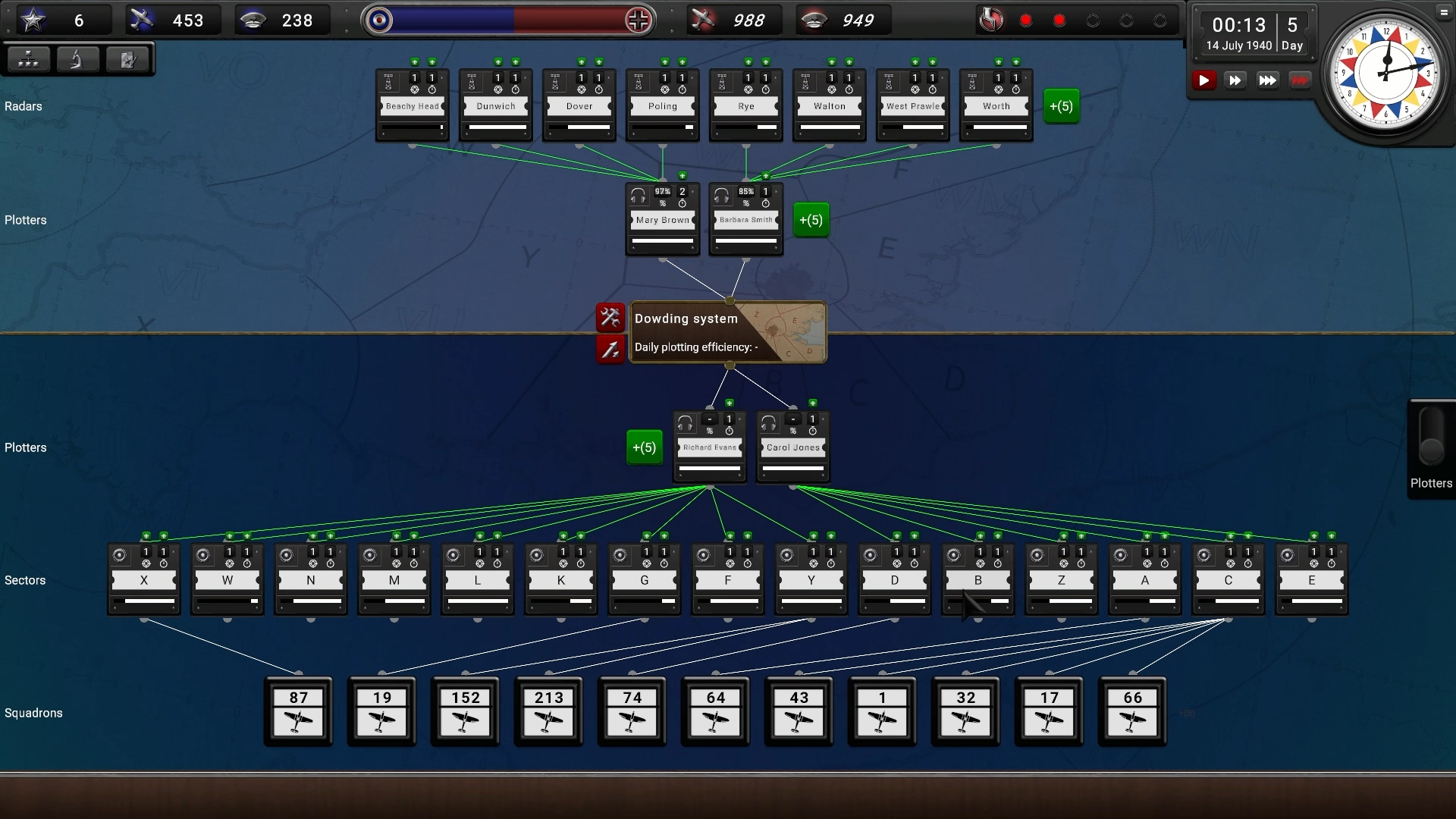
Radio Commander Battle of Britain ’40 Dowding system panel
Have we succeeded? That's ultimately for you to decide!
Beta applications for Radio Commander: Battle of Britain ’40 are now open!
If you'd like to experience the game, put our design decisions to the test and help us make the game better, we'd love to hear from you.
Apply for the beta here:
https://www6.slitherine.com/beta/radio-commander-battle-of-britain-40
See you in the skies!
WISHLIST THE GAME ON STEAM AND SLITHERINE WEBSITE.