The Biggest Challenges in Developing Radio Commander: Battle of Britain ’40 – Part 1
Hi everyone! I’m Jacob, lead developer of the upcoming Radio Commander: Battle of Britain ’40, as well as the original Radio Commander, released back in 2019.
In our recent dev logs, I promised to talk about one of the biggest challenges we’ve faced during development: bringing historical accuracy and realism together with engaging gameplay. Today, I’d like to start with a particularly tricky question: who exactly should the player be in command of the Battle of Britain?
A Complex System of Command
When we started working on Radio Commander: Battle of Britain ’40, we knew that recreating the British air defense system during the Battle of Britain would be a major challenge. The British Fighter Command was organized into multiple levels, each with its own responsibilities and clearly defined chain of command. The Dowding system was an enormous collective effort involving hundreds, if not thousands, of people. It certainly wasn't a one-man army.
And that presented us with a fundamental design problem. How could we give the player a meaningful role, a clear set of objectives, and the feeling that their decisions mattered without committing a major historical sin by handing them responsibilities that would never have belonged to a single person?
After all, we wanted players to experience the challenges of commanding Britain's air defense network, not become a superhero who single-handedly ran the entire operation.
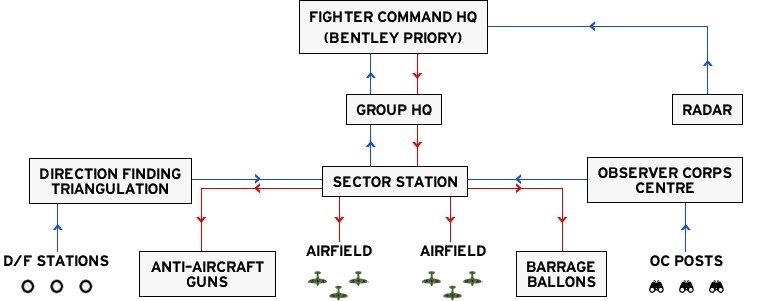
Dowding system simplified org chart
One Player, Many Hats?
Our first idea was to let players switch between different positions within the Dowding system.
Imagine starting in a plotting room, processing incoming information, and then moving to the role of a Controller, trying to figure out where the German attack was headed. Later, you could take on the responsibilities of a Sector Controller, directing British pilots toward an interception with enemy aircraft.
Each position would offer a different perspective on the unfolding battle. Players would experience the flow of information through the system and discover how individual decisions at different levels contributed to the larger effort. We even considered a campaign progression system in which players would begin at the bottom of the Dowding system's hierarchy and gradually work their way up until they were in charge of Fighter Command itself.
On paper, it sounded like a great way to combine historical authenticity with a sense of progression. You would learn the system from the inside out, gradually taking on more responsibility as the campaign advanced. But the more we thought about it, the more problems we discovered.
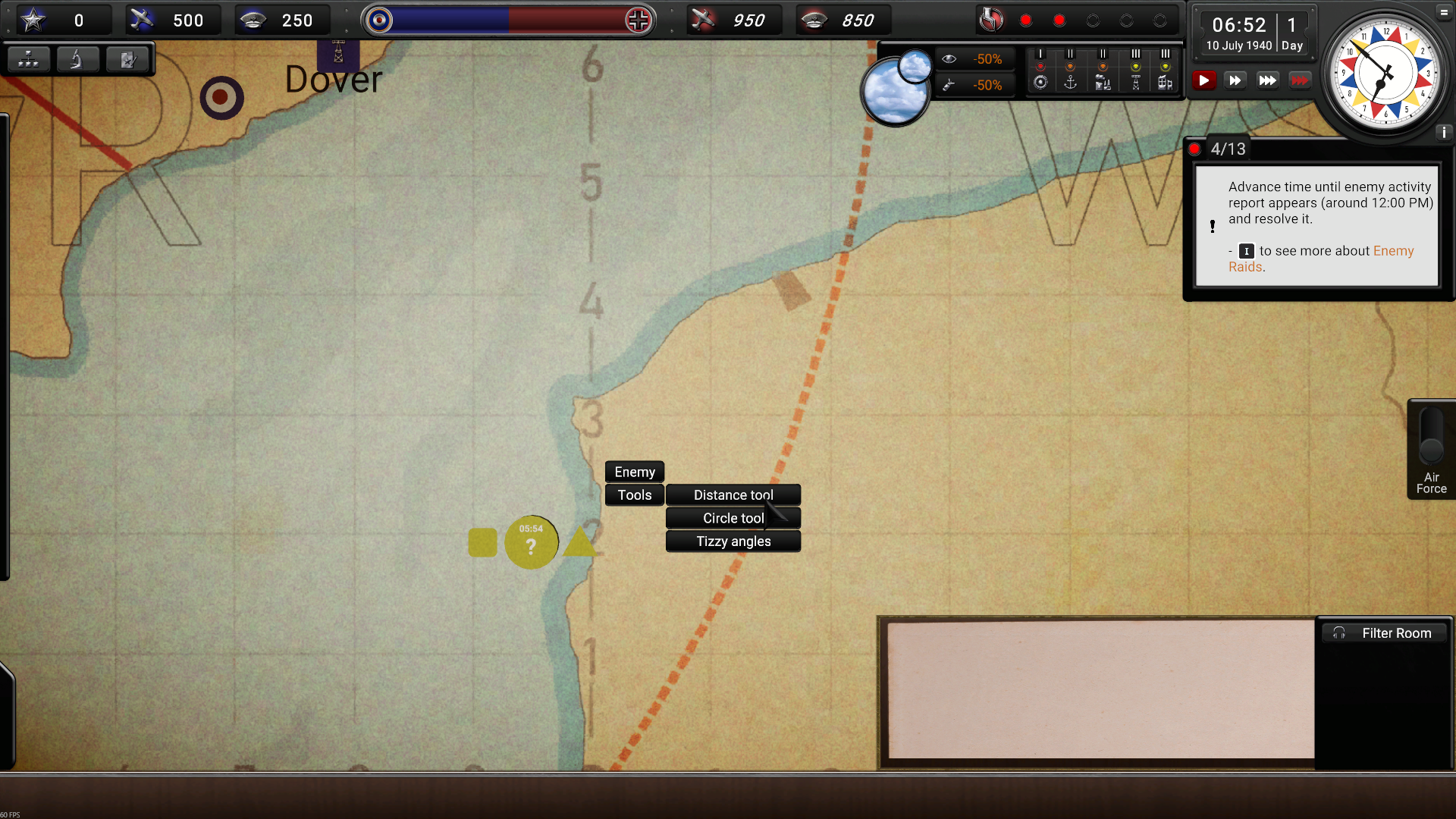
Radio Commander: Battle of Britain ’40: Players can still plot radar reports manually or use map tools to determine possible interceptions.
When More Realism Means Less Fun
Here's the paradox: our attempt to make the game more realistic was actually pushing us in the opposite direction.
For starters, the different command positions weren't easy to explain in a way that would make sense to players. What exactly distinguished a Group Control room from a Sector Control room? What were their respective responsibilities? And where did the main Filter Room fit into the picture? These weren't just questions of historical terminology. Each position needed to feel distinct in gameplay, and players needed to understand why they were doing one job rather than another.
There was another, even more important problem. The more we divided the player's responsibilities among different positions, the more we risked making them feel like just another cog in a huge machine. Imagine spending several minutes processing information and issuing orders, only to realize that the outcome of the battle depends just as much on dozens of other tasks being performed by NPCs. Your decisions might be historically accurate, but would they feel meaningful?
A historically authentic chain of command doesn't automatically translate into a satisfying gameplay loop. And as developers, we had to acknowledge that.
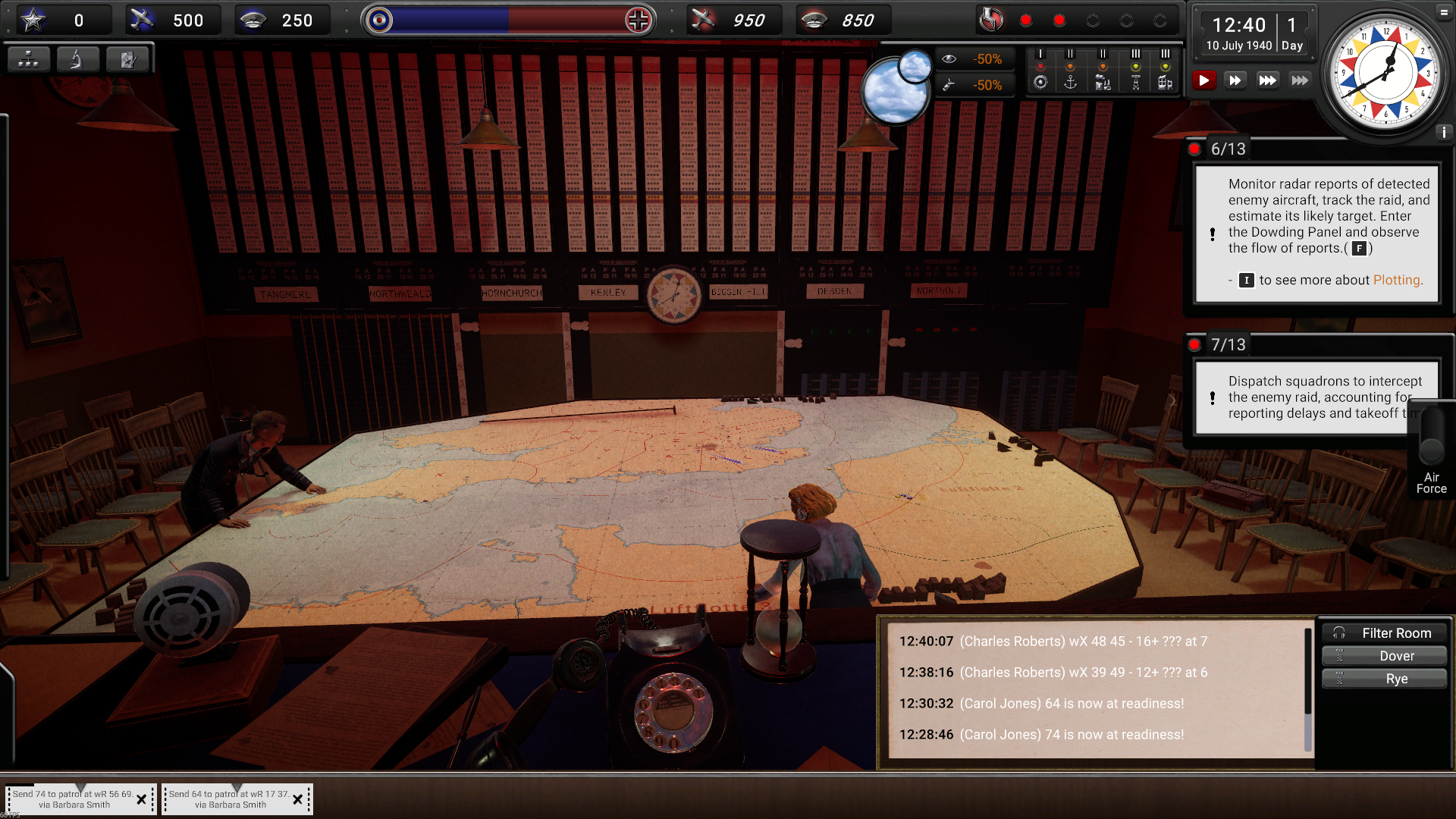
Radio Commander: Battle of Britain ’40: NPCs are busy plotting reports on the map in the Filter Room view.
Simplifying the Dowding System
Eventually, we decided to simplify things a little. Rather than reproducing every layer of the historical command structure, we chose to streamline the Dowding system for the purposes of the game.
One of our key decisions was to skip Group Commands and model the system in a simplified way, with both Sector Commands and radar stations directly connected to the main Filter Room. This gives the player a more immediate overview of the situation and creates a clearer relationship between incoming information, their interpretation of events, and the orders they issue.
We also decided against including certain simulator-like activities, such as manually plotting individual messages received from radar stations. In the real system, these tasks were an essential part of the process. In our game, however, they're handled by NPCs. Instead of spending their time reproducing every individual step of the historical workflow, players can focus on interpreting information, issuing commands, and developing the network to suit their needs.
In other words, we shifted the emphasis from doing every job to making the decisions that matter.
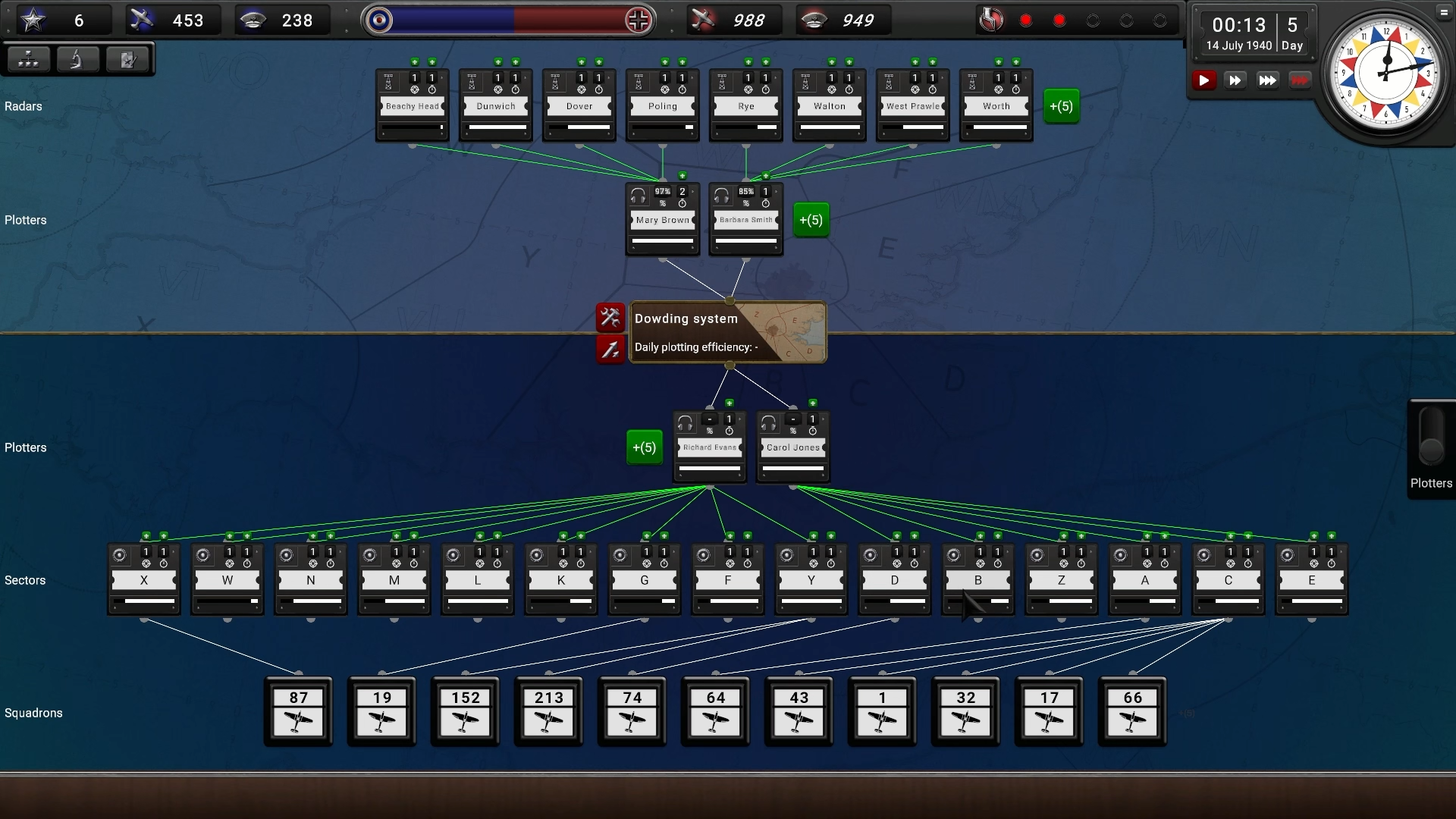
Radio Commander: Battle of Britain ’40: Dowding system panel
Commanding, Not Micromanaging
This brings us to the core of our design philosophy for Radio Commander: Battle of Britain ’40. The player's role is to interpret the available information, assess the developing situation, and make decisions under pressure. They must figure out what the enemy is trying to achieve, determine how best to respond, and direct the resources at their disposal. At the same time, they can develop their network to better support their command decisions.
We believe this approach preserves the spirit of the historical experience while making the gameplay more focused and accessible. The player isn't responsible for every small detail, but they are responsible for understanding the situation and deciding what to do about it.
Was It the Right Decision?
We've made what we believe is the best compromise between historical accuracy, realism, and engaging gameplay. We've simplified the system to give players a clearer role, reduce unnecessary micromanagement, and make their decisions feel more consequential.
Will this streamlined command structure deliver the right balance? Will players feel sufficiently challenged without being overwhelmed by historical complexity? And will our approach capture the unique experience of coordinating Britain's air defenses during one of the most critical moments of the Second World War? Only time will tell.
WISHLIST THE GAME NOW: