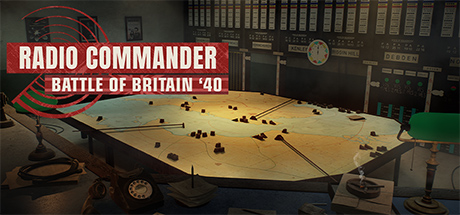
I’m Jacob, the lead developer of the upcoming Radio Commander: Battle of Britain ’40, as well as the original Radio Commander, which was released back in 2019.
In my last dev log, I promised to talk about one of the biggest challenges of this project: finding the right balance between historical accuracy, realism, and engaging gameplay. Before we get into that, though, I think it’s worth taking a step back and talking about the games that helped shape this project.
There are quite a few different references behind Radio Commander: Battle of Britain ’40. Some are obvious, some are surprisingly different from what we are making, and some helped us mainly by showing us what not to do.
Strategy games about the Battle of Britain
There actually aren’t that many strategy games focused specifically on the Battle of Britain. The only one I knew of when I started working on the project was Battle of Britain, released in 1999. It’s now considered abandonware, but it was an interesting reference point simply because there aren’t many alternatives covering the subject from a strategic perspective.
I didn’t spend too much time looking at major World War II strategy games such as Panzer Corps, Unity of Command, or Order of Battle: World War II. They are great games, but their scale and gameplay systems felt quite far away from what I had in mind for Radio Commander: Battle of Britain ’40. I did, however, look at several WW2 grand strategy games. Hearts of Iron IV was particularly useful, although mostly for a completely different reason: its interface.
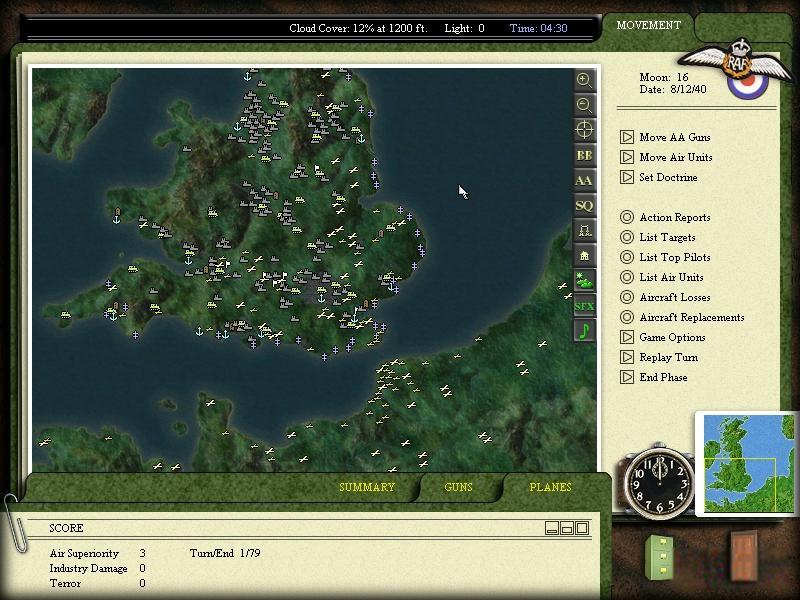
Battle of Britain (1999)
Flight simulators: an important but distant reference
The Battle of Britain has obviously been represented much more often in flight simulators. There are games such as IL-2 Sturmovik: Cliffs of Dover, 303 Squadron: Battle of Britain, and Microsoft Combat Flight Simulator, among others.
I actually have a bit of a personal connection with this genre. I played flight simulators when I was a teenager, and my dad used to play them as well. But despite that familiarity, they didn’t turn out to be particularly useful as direct references for this project. The reason is simple: Radio Commander: Battle of Britain ’40 is not about putting the player in the cockpit.
I’m interested in what happens around the aircraft — the information coming in, the decisions being made, the squadrons being directed, and the uncertainty involved in trying to understand what is happening over England. That means that even a very good flight simulator is solving a fundamentally different gameplay problem.
There was one notable exception, though.
Battle of Britain II: Wings of Victory
Technically speaking, it is a flight simulator — but it also has a much more elaborate strategic layer which is very useful to study.
The game offers a fairly deep simulation of the wider war effort. Patrols and responses to enemy raids can be automated, while the player operates at a higher level and watches events unfold across the map. Each “turn” starts with directives. The player assigns squadrons to high-level tasks and then watches their movements and the developing situation. Interestingly, it also takes Dowding’s system into account,but boils it down to a calculation, whether a raid is successfully recognized.
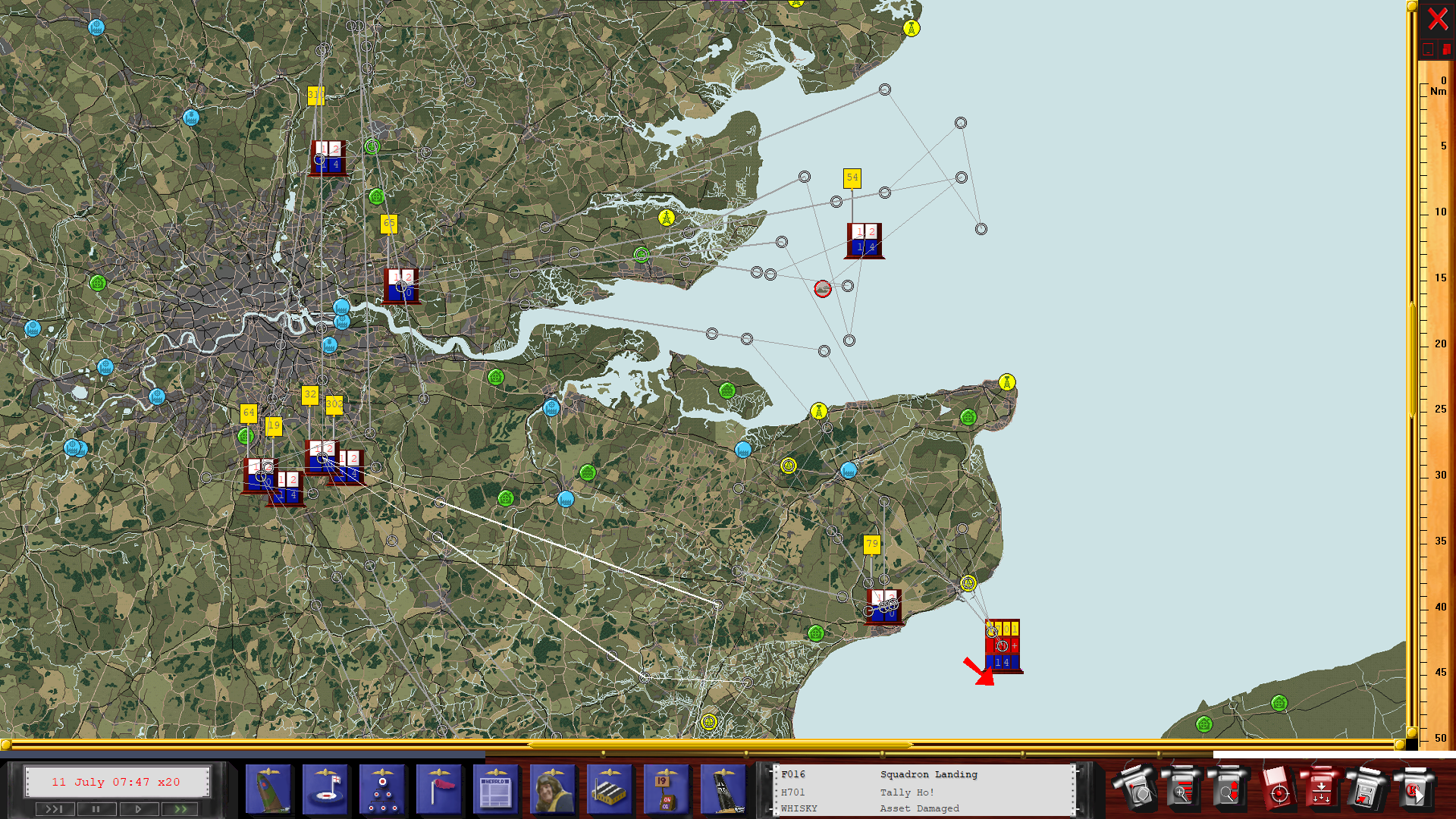
Battle of Britain II: Wings of Victory (2005)
From Achtung Spitfire! to Scramble
I also looked at some dedicated air-combat strategy / tactical games. One example is the rather old Achtung Spitfire!, released in 1997. It’s an interesting piece of Battle of Britain gaming history and has plenty of ideas worth studying.
At the other end of the spectrum, there is Scramble: Battle of Britain, published by Slitherine. This is a much newer game, and a brilliant example of how the Battle of Britain can be turned into an engaging tactical experience.
The problem was that many of their mechanisms are difficult to transfer to the higher-level perspective we wanted for Radio Commander: Battle of Britain ’40.
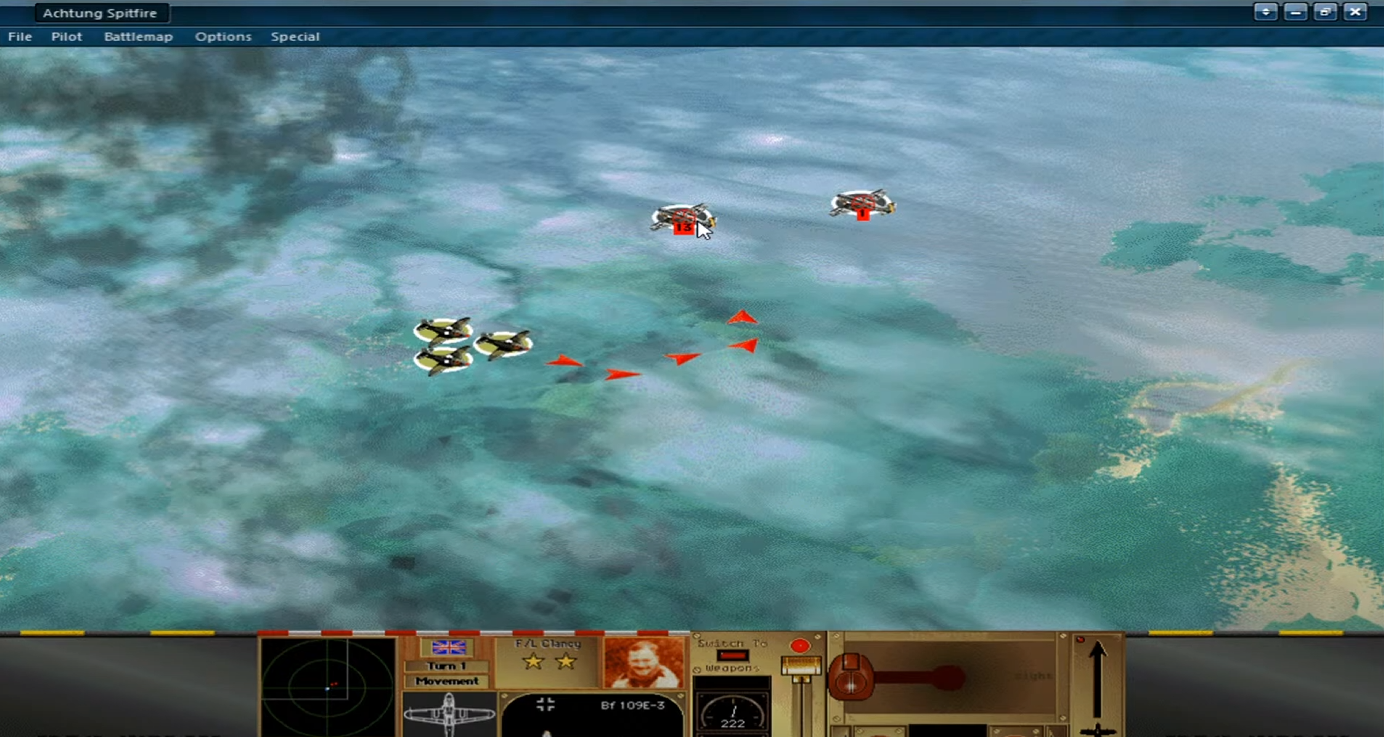
Achtung Spitfire! (1997)
The biggest inspiration: RAF: Battle of Britain 1940
The biggest inspiration actually came from something rather different — a tabletop game — specifically, RAF: Battle of Britain 1940, also known as RAF: Lion.
This is where things really started to click for me. I spent a lot of time watching videos of people playing the game and, perhaps even more importantly, explaining what they were doing at every stage. That turned out to be incredibly useful. Watching someone play a game while explaining their decisions gives you a very different perspective compared with simply reading a rulebook. You start to understand not just what the mechanics are, but why the player is making a particular decision.
And with RAF: Battle of Britain 1940, I found myself fitting almost instantly into the kind of campaign I had been imagining for Radio Commander: Battle of Britain ’40. The way the game turns a huge historical campaign into a manageable set of decisions was particularly interesting to me. There is a lot of abstraction involved, of course. That combination — historical subject matter, uncertainty, information management, and gamification of the campaign — is very close to what I want to achieve with Radio Commander: Battle of Britain ’40.
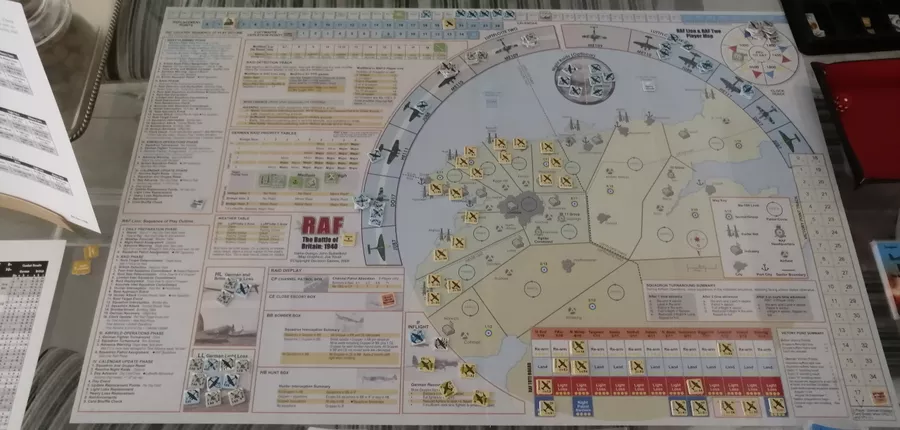
RAF: Battle of Britain 1940 (2009)
That brings us back to the subject of the next part of this series — how do you take a historically accurate and highly complex system like the Battle of Britain and turn it into something that is both realistic and fun to play?
That is where things get really interesting. But at least now, we are on the same page when it comes to our references.
WISHLIST THE GAME ON STEAM AND SLITHERINE WEBSITE.