Before we start..
Do you know that you can join the Discord server for Radio Commander: Pacific ‘41? Find the link here.
Radio Commander Pacific '41 is to be fun, yet capable of surprising even those well-versed in the history of the Pacific War. That is why some fictional elements are incorporated into the game. This allows not only to follow in the footsteps of a commander from that era but also to face the kind of unexpected challenges that are an inherent part of the battlefield. Fiction in the game makes playing out "what-if" scenarios more enjoyable and simplifies gameplay in the areas described below.
The fictional elements in the game are...
Fictional scenarios
Fictional scenarios in the game serve a dual purpose. On one hand, they involve battles that never actually took place in history. On the other, they encompass the specific tasks required to complete a mission.
These fictional scenarios allow even experts on the Pacific War to enjoy playing out a battle without knowing the final outcome from the start. While the game generally follows a historical flow, certain scenarios can offer surprising twists. You might find yourself fighting for an island that was never actually captured in real life. This is designed to put you in the shoes of a commander who cannot foresee the future. Fictional scenarios let you fully experience the emotions of command: anxiety for your troops, the bitterness of things going wrong, and the joy of victory.

Even scenarios based on historically accurate island battles can feature fictional objectives. For instance, you might be tasked with leading a small, fictional unit, a move that ultimately paves the way for deploying massive forces.
Unit numbers and size - simplification of command
The game needs to be enjoyable, so the range of units is reduced as well as the number of units and size, the player has to command. Pacific battles involved clashes between thousands of troops. However, for the game, it is more important that you experience what it is like to rely on radio reports. The specific units and troop numbers provided to you are sufficient for this purpose.
The scenarios are designed to be engaging, even though they depart from the realities of deploying entire corps, divisions, or brigades.
You will be given companies or platoons—but they are *your* soldiers. This allows you to conduct combat operations via radio, without the need for large staffs to analyze complex data from a vast array of diverse troop types.
On the other hand, the fictitious number and size of the units also apply to the Japanese side.
Simplification of fire support
Fire support has been simplified to the level of a single ship and a bomber mission—contrary to historical reality, which involved entire fire support and aviation fleets. This simplifies the process of calling in battlefield support. The entire artillery command chain has been reduced to communicating with an officer codenamed "Argument." You don't have to waste time navigating the complexities of scheduled, unscheduled, and on-call artillery fire. Got a problem? Just call Argument.
The same applies to air support and scouting. Instead of a complicated command structure involving ground, naval, and air units, you simply have a bomber mission—or a reconnaissance mission—at your disposal. We’ve also simplified weather mechanics: flying conditions are always favorable. The only thing to remember is that air support does not operate at night.
Simplification of logistics
Game has also simplified the unit types; you have at your disposal exactly what we outlined in previous Transmissions. That does not mean there is no logistics, however. You will still have to contend with shortages of ammunition or fuel, but you won't have to deal with the complexities of managing elaborate logistical support directives.
Resource replenishment is handled in a simplified manner—by using field bases.
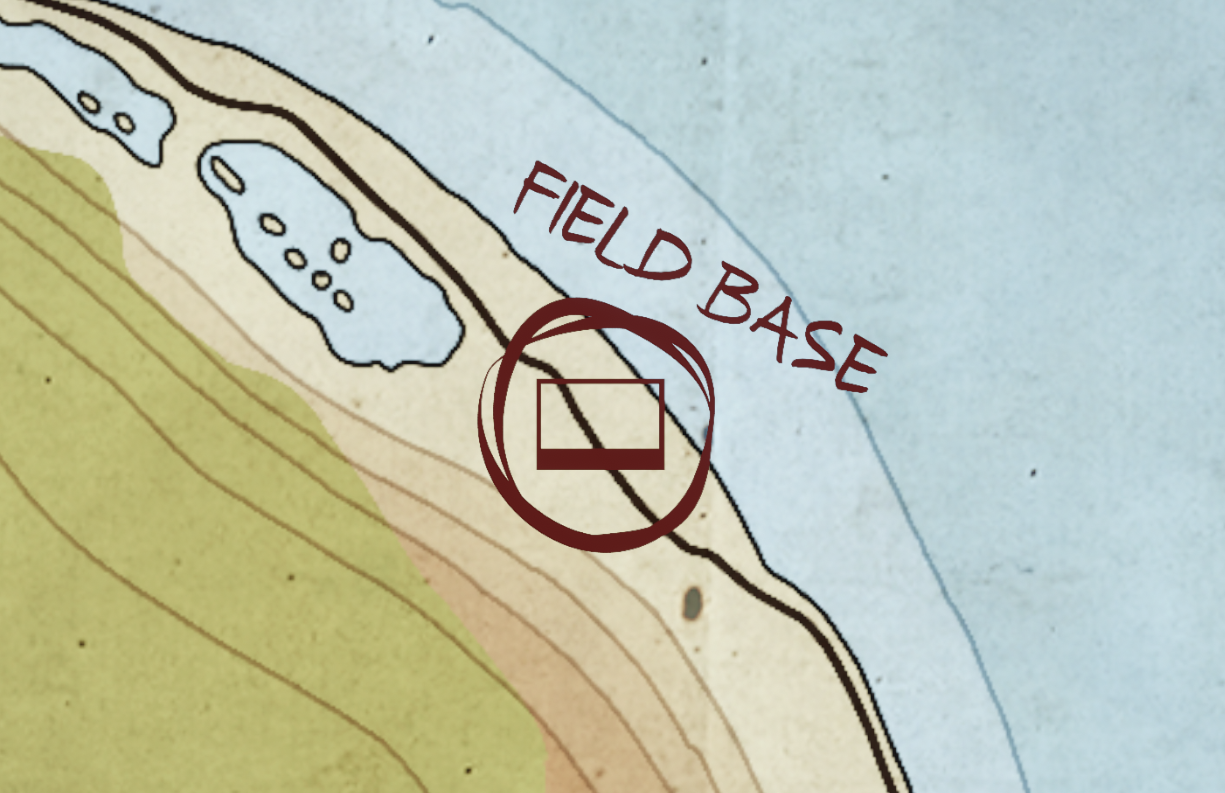
However, even this simplified process requires time to carry out, which must be factored into the time allocated for combat operations. At times, you will have to choose between capturing an objective immediately—even with a fatigued unit—or spending time on replenishment (an opportunity the opponent might exploit).
Duty officer - staff effort simplification
In some scenarios, you will encounter a duty officer. He assist by relaying reports from outside your chain of command and sometimes offering an opinion. This fictional character embodies the work of the staff units that play a crucial role in combat operations—including those in the Pacific.
However, just as in real life, the duty officer can offer help but cannot relieve the commander of the burden of responsibility for a decision.
In that respect, there is no fiction.