With this expansion, Kingdoms introduces the largest campaign ever available in the game: the Mega Grand Campaign.
It begins at the same starting point as the base game campaign but continues beyond the late campaign and concludes in 1492, a date chosen deliberately to mark the end of the medieval era and the threshold of a new age.
This campaign makes use of the extended map introduced with DLC1, even if you do not own it! This decision guarantees the largest and most complete strategic experience possible, without compromise on geographical scope.
Note though that certain features such as War Campaigns, Great Trade Routes, and regional Impediments remain tied to DLC1 ownership. For the optimal and complete experience, we strongly recommend having DLC1.
The initial setup has been fully revised, incorporating the latest historical adjustments to cultures, regional control, and political balance in order to better reflect the realities of the eleventh century. Some of the new buildings introduced in the expansion are also present from the start, further enhancing immersion.
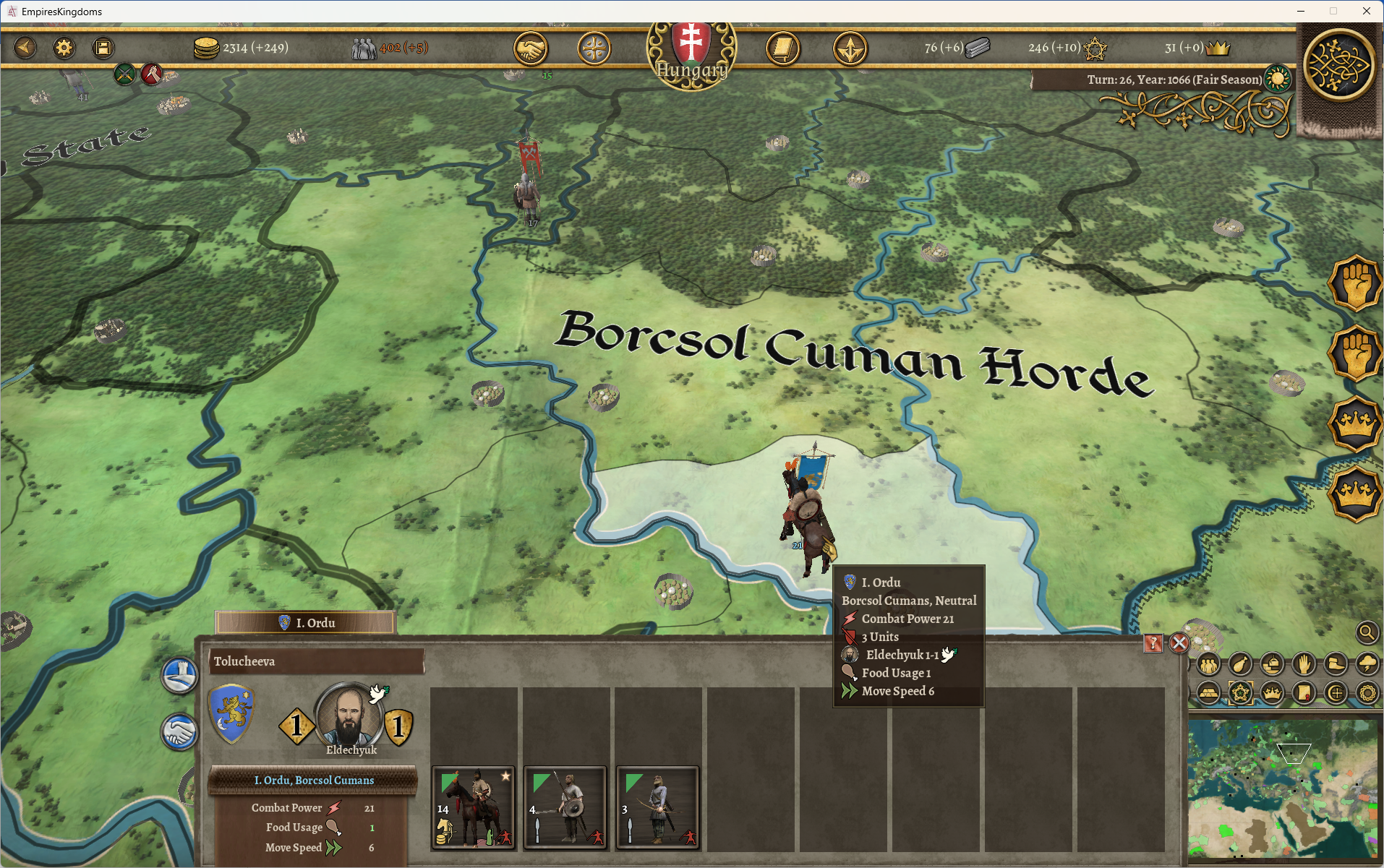 New Nations: More than 15 nations have been added, including Cuman tribes that were historically far from unified. This allows for a richer early-campaign dynamic.
A dynamic four-century campaign
A campaign spanning nearly 800 turns requires specific systems to maintain historical plausibility while preserving complete player freedom.
To achieve this, the Mega Grand Campaign includes several moderating events, primarily aimed at helping AI-controlled factions remain historically grounded when major powers collapse. For example, specific events encourage the emergence of replacement factions following the fall of large empires such as the Seljuqs or the Fatimids, preventing prolonged power vacuums.
Similarly, several national perks evolve dynamically over time, ensuring they remain historically appropriate. Certain early institutions naturally fade away, while new structures and traditions emerge. This prevents anachronistic situations, such as England retaining early medieval political institutions centuries beyond their relevance (no Witan in 1200!).
The campaign also includes a dynamic development adjustment system. Under certain conditions, the cost of buildings or the food required for population growth may increase if development progresses too quickly compared to historical expectations. This mechanism helps preserve a believable long-term pace across the full duration of the campaign.
All major developments introduced in the 1223 late campaign also appear progressively and dynamically, including:
-
the rise of the burghers and urban societies,
-
the introduction of gunpowder weapons,
-
the establishment of the great trade routes,
-
and of course, the Black Death, whose consequences can be devastating.
The Mega Grand Campaign offers a truly unique long-term experience, allowing players to witness the arrival of the Mongols, the rise of new kingdoms, and the collapse of ancient empires over four centuries.
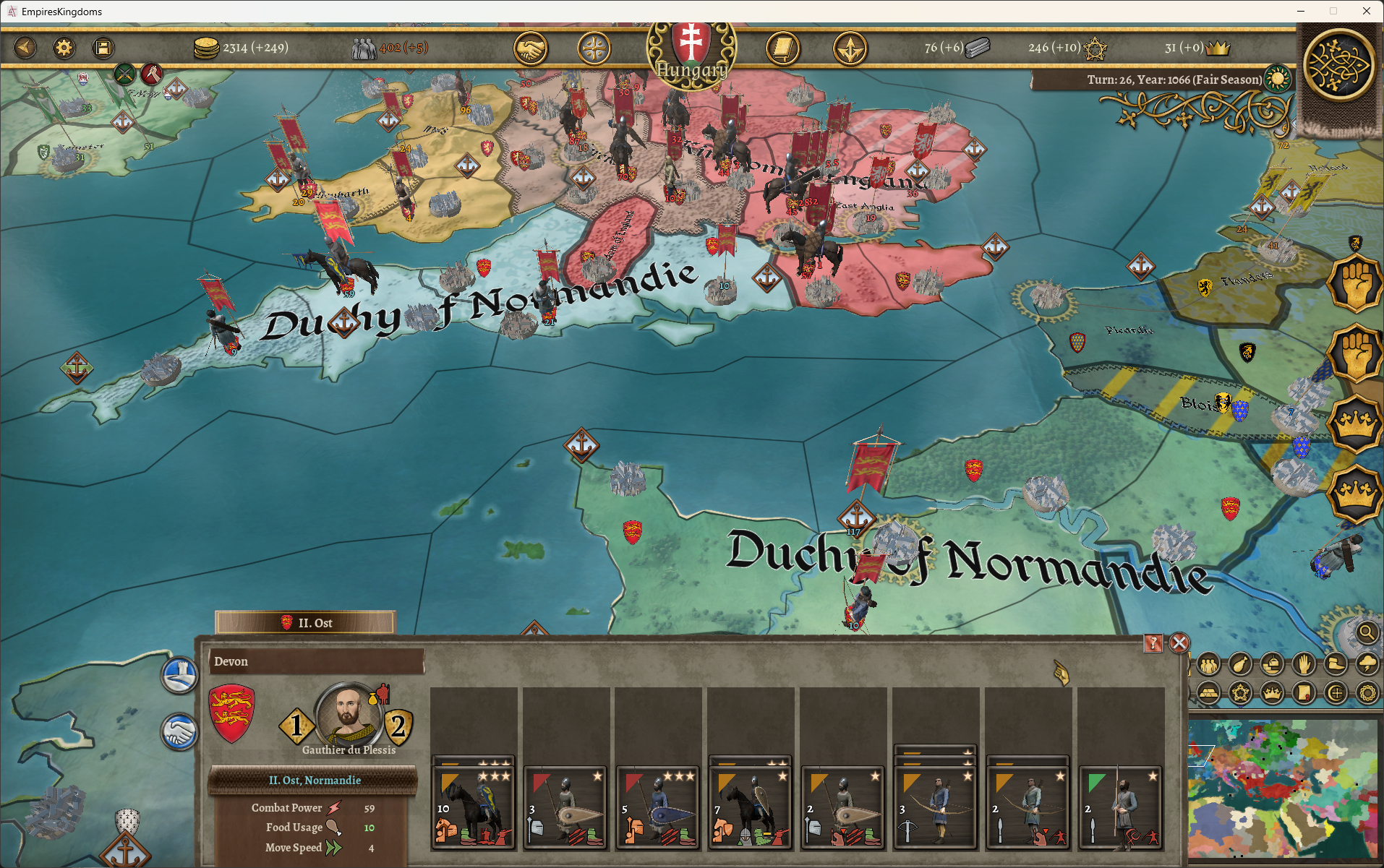 Normans and AI Behavior: The Mega Campaign AI includes additional steering to produce more historically plausible outcomes than the base campaign. As a result, the Normans will often cross the Channel.
Over 70 new buildings
Another major addition to the expansion is the introduction of more than 70 new buildings, greatly expanding regional development options.
We have already discussed some of them in previous diaries, including:
-
Guilds, which appear alongside the burghers and unlock powerful abilities if sufficient burgher or craftsman population is present,
-
and gunpowder-adapted fortifications, designed to resist bombard artillery.
But these represent only part of the additions.
55 additional buildings are introduced and can appear in all campaigns and scenarios, without specific period requirements.
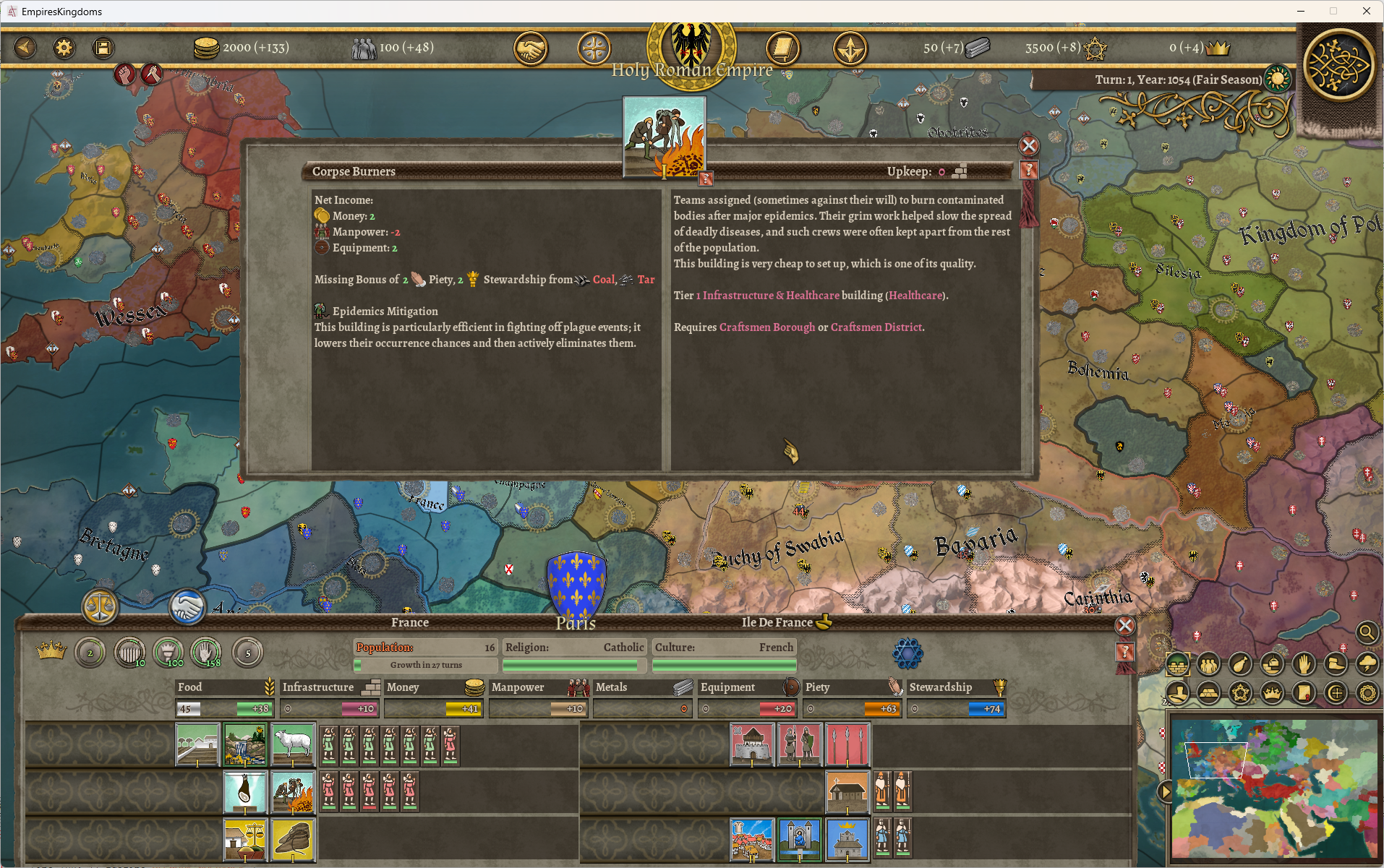 Corpse Burners: Including late additions tied to the rise of gunpowder, 70 buildings have been added. Some will prove essential, such as corpse burners to help contain devastating epidemics.
The return of Tier III buildings
One of the most significant additions is the return of Tier III buildings, absent since Empires.
These structures represent major investments and require at least six buildings of the same category in the region before they can be constructed, reflecting a highly developed and specialized regional economy.
These buildings serve several purposes:
-
expanding underused trade goods production,
-
providing new strategic capabilities,
-
or triggering regional gameplay events.
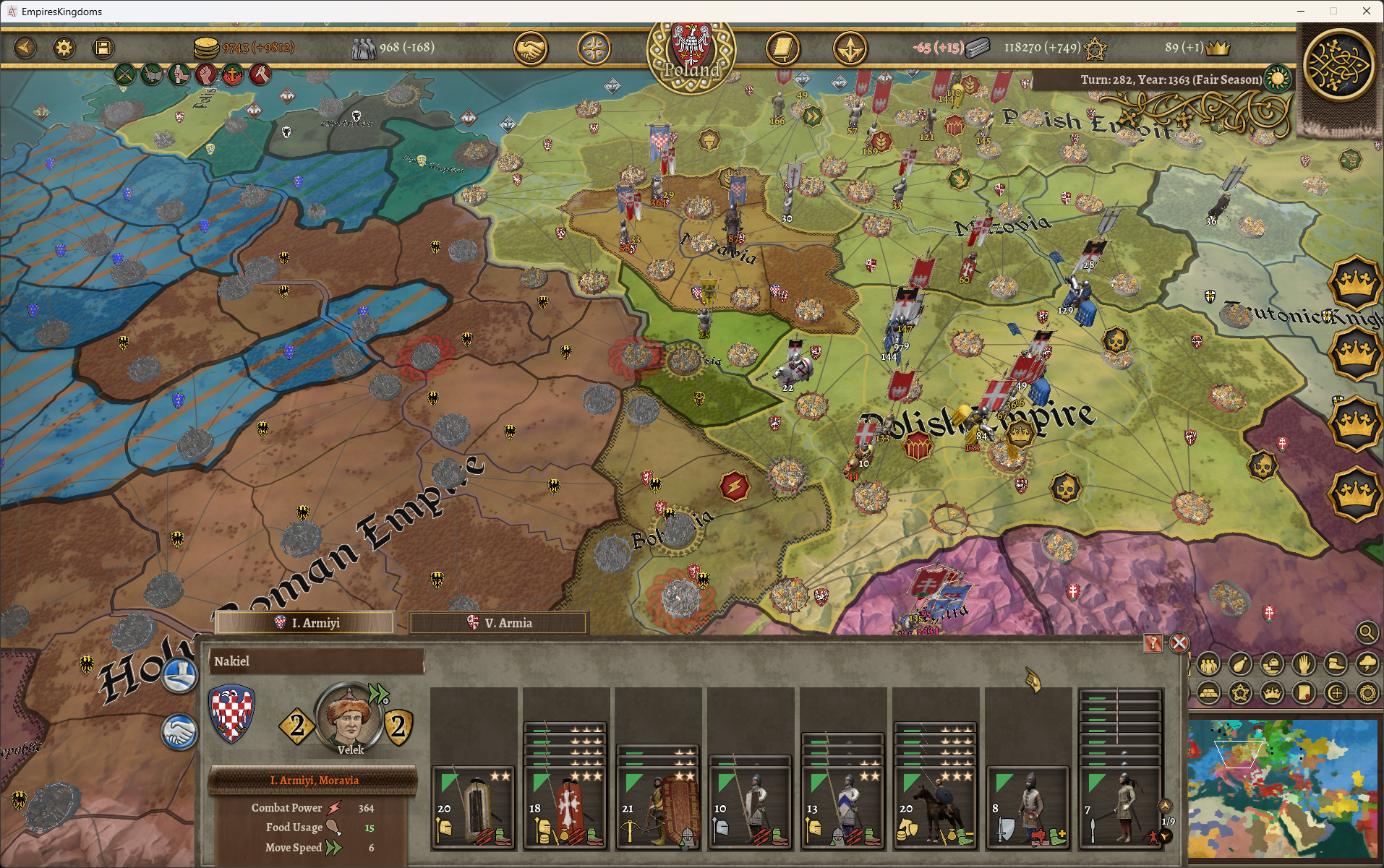 Late Units: Around 1300 - or earlier if your reforms advance quickly - new unit rosters become available, extending to the dawn of the 16th century.
Some building examples:
-
Saffron Fields, allowing spice production within Europe.
-
Mass Graves and Corpse Burners, providing additional means to combat epidemics alongside powerful structures such as the Christian lazaretto.
-
Inquisition Offices, helping contain the spread of heresies, which can otherwise destabilize entire realms.
-
Royal Mints, enabling increased coin production, at the risk of higher inflation.
These examples represent only a fraction of the dozens of new buildings covering economic, religious, military, and public health functions. If many are Tier III, several are available as Tier I, from the start.
Compatibility with Field of Glory Medieval II
Finally, all nations have received updated army lists, including new Tier IV and Tier V units, allowing late medieval armies to be represented more accurately.
These additions also improve compatibility with Field of Glory Medieval II, enabling players to experience better and more historically authentic tactical battles.
As always, owning additional DLCs is not required to use these units in any exported battles.